BachLoyalist.com is the ultimate reference to everything related to Vincent Bach & Bach Stradivarius brass instruments. This site has grown through the contributions of fellow Bach loyalists and is one of the most complete references of Bach-related instruments.
Below are images and articles summarizing changes in the bell manufacturing process over the past 50+ years. The video below is from Conn Selmer and shows some final steps of creating a trumpet bell in the Elkhart factory.
Additional details about the process are shown below from various images and Selmer Bandwagon publications.
“… the more things change, the more they stay the same.”
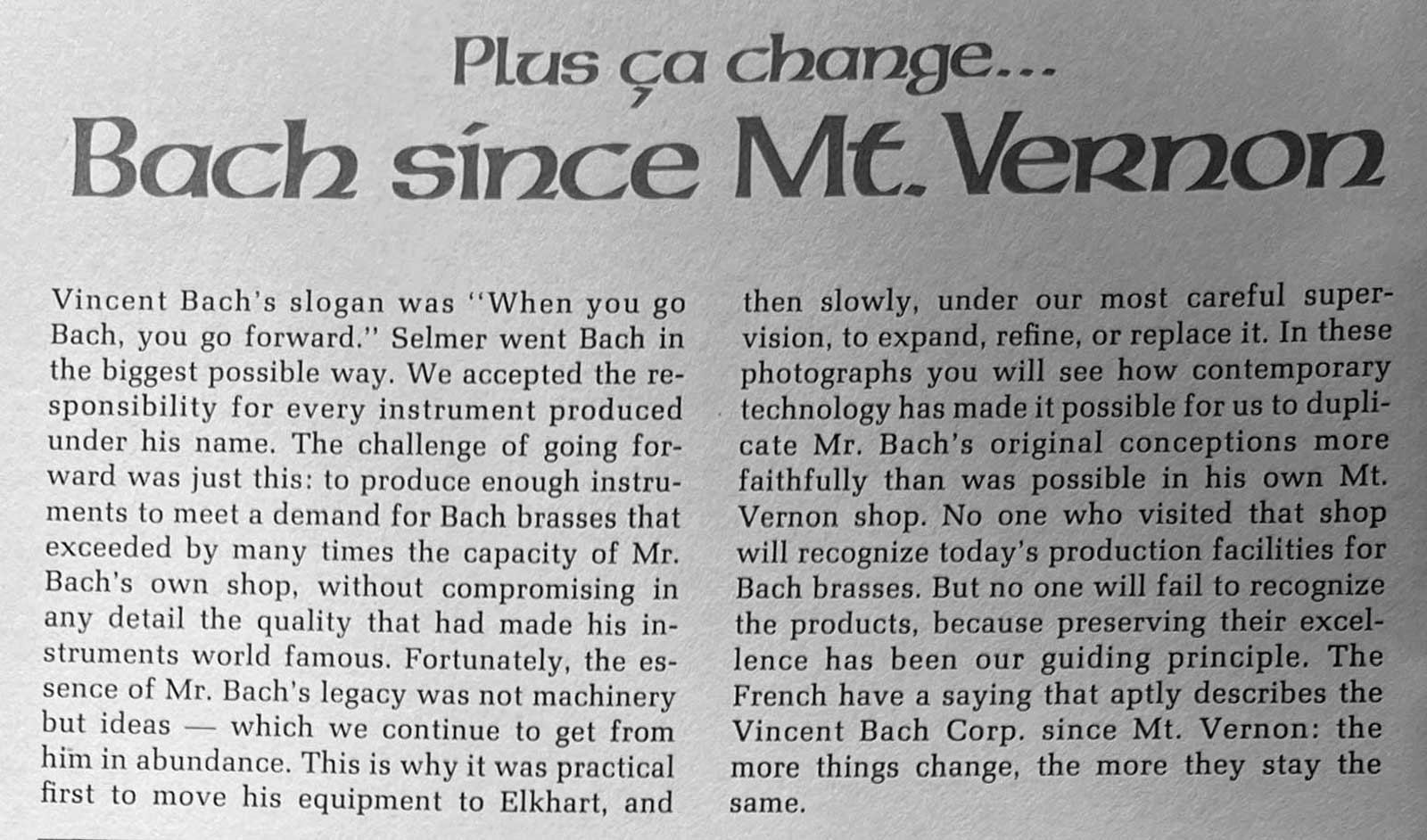
In the early 1970s, Selmer started to change its manufacturing process when it moved to its new facility in Elkhart. Roughly ten years after the transfer of Mt. Vernon tooling, they began to make various changes to their manufacturing process. In a dealer newsletter in 1973, they shared details of the changes in their bell manufacturing processes.
Bell Manufacturing Process - Hydroformed / Bladder Press Forming (1973)
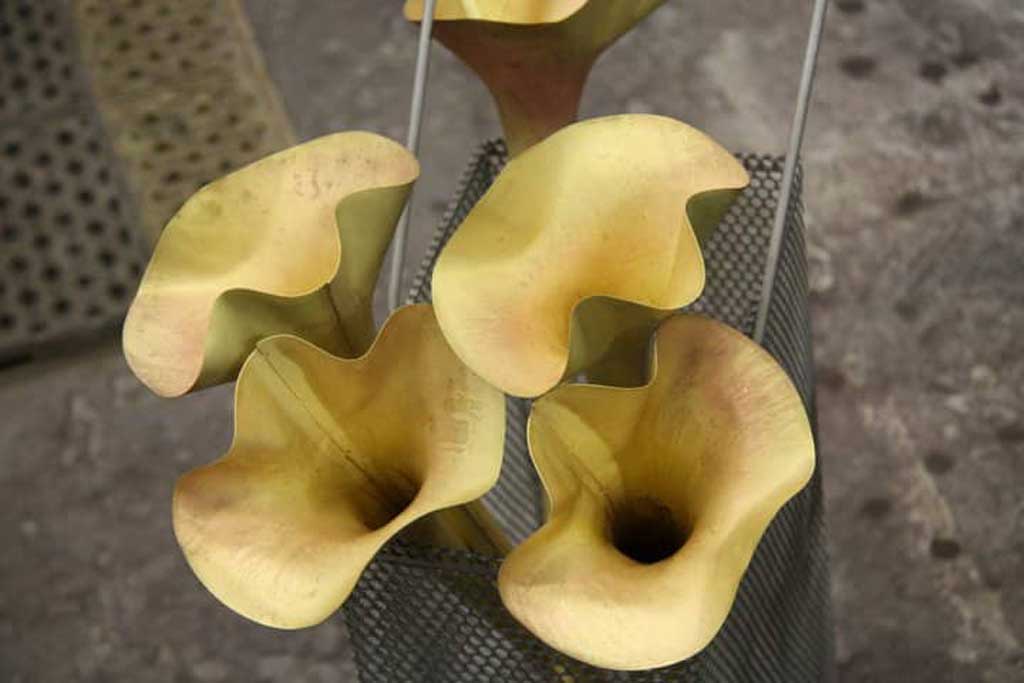
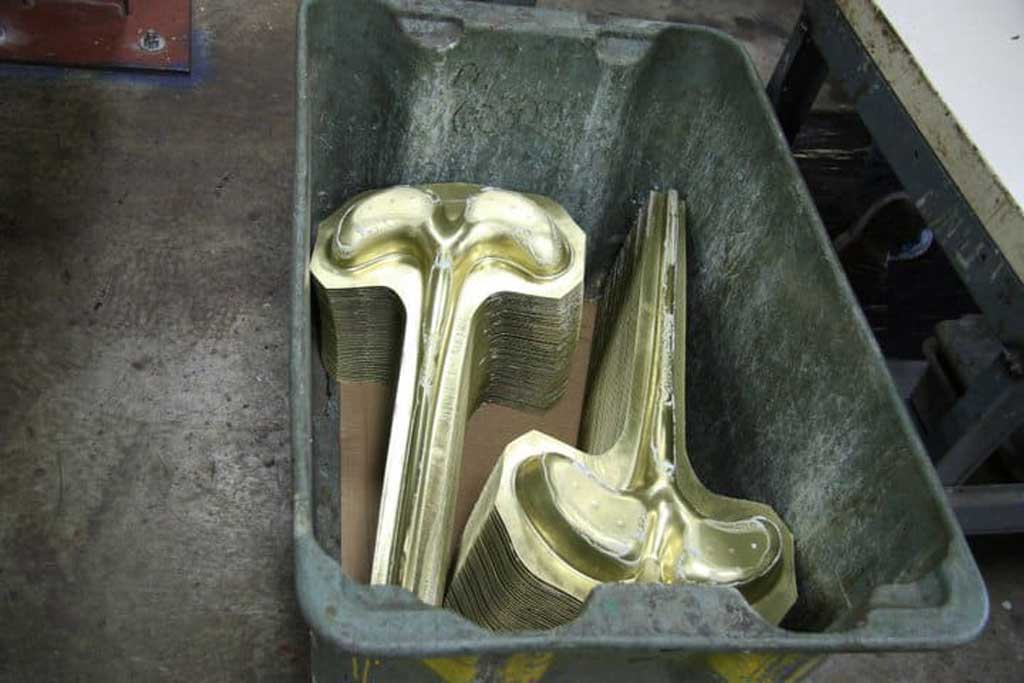
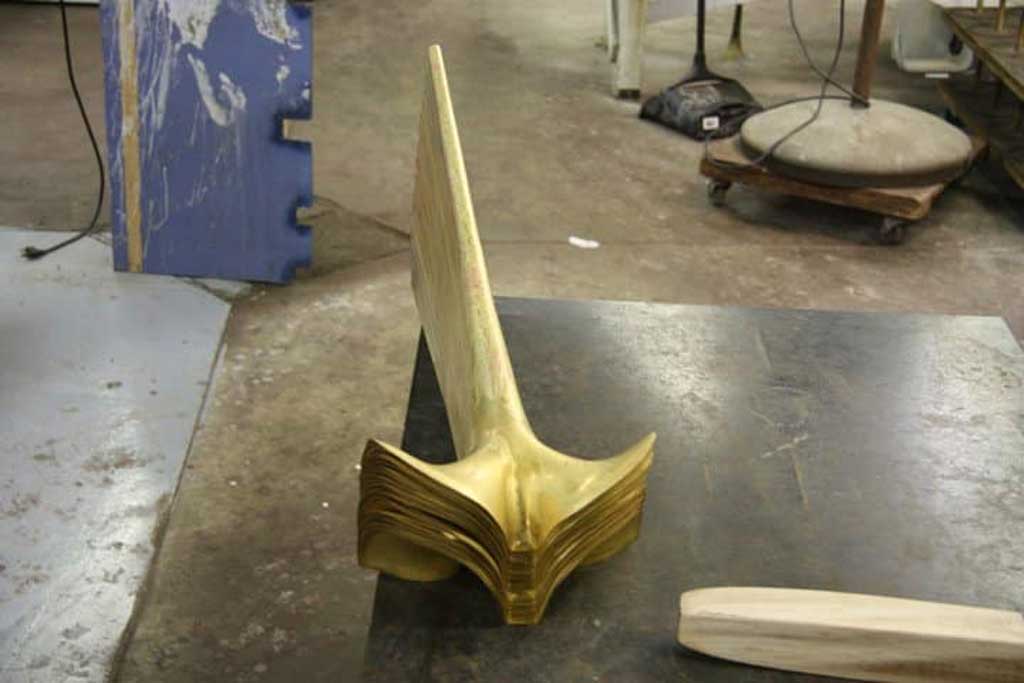
In the early 1970s, the Selmer team developed and started manufacturing trumpets and trombone bells using a hydroforming-based process to create a “flower” blank rather than a traditional “fan/funnel” style trumpet preform. This manufacturing shift allowed for a more accurate and consistent brass instrument bells.
This Elkhart bell manufacturing process change was shared in a 1973 Selmer newsletter with their dealer network. The article and images below are from various Bach loyalists shared over the years.
” A handmade one-piece trumpet bell is a serious product problem (this is why only the finest instruments have one-piece bells).
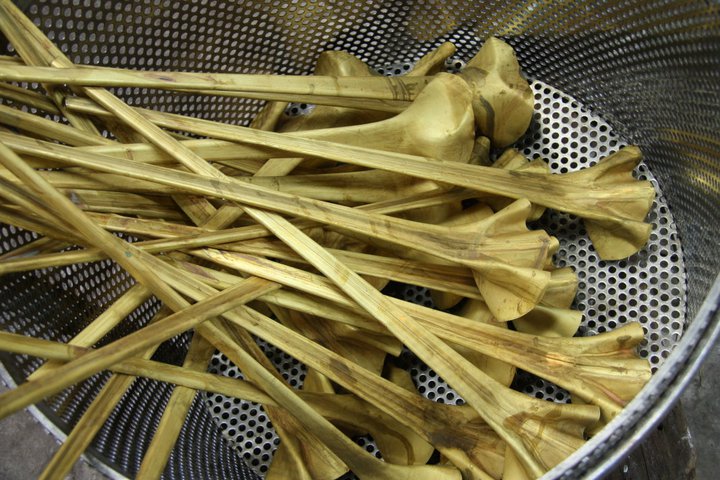
We recently discovered that one solution lies in solving a tricky problem in geometry. By starting with the curious flower-like form shown here instead of the older, more obvious shape – which resembles a fan – we can hammer the bell into shape more accurately and consistently than before (compare the symmetrical rough bell in the picture above with the crude funnel-like bell next to it, made in the traditional way.”
source: Selmer Bandwagon #69, page 5
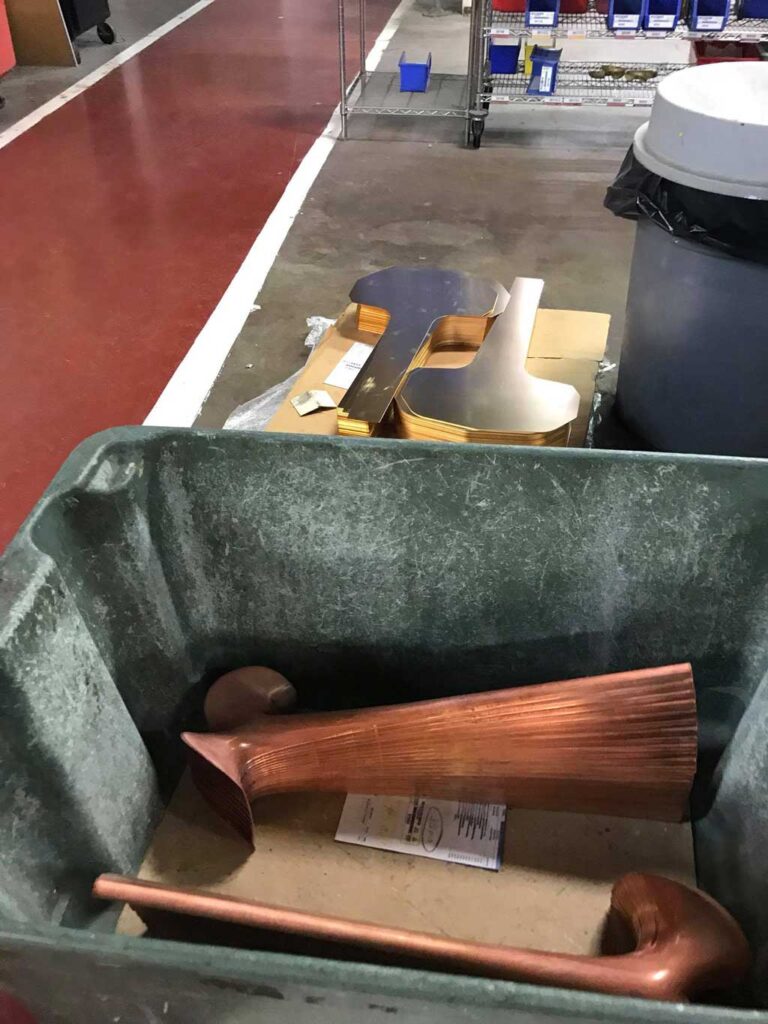
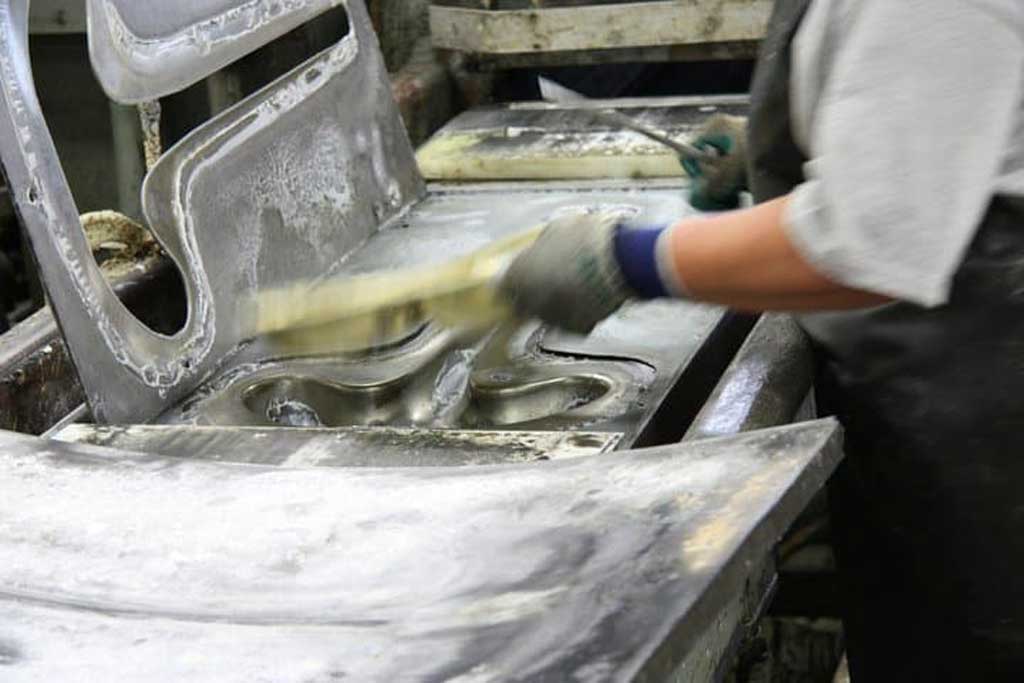
The hydroforming/bladder bell preform forming process starts with a pre-cut sheet of bell brass loaded into the hydroforming machine shuttle. It is then formed into a “flower” shape and shaped into a bell preform, to be brazed and shaped into a bell, as shown in some of the images taken with permission shared by Bach loyalists through the years from plant tours.
The two vintage hydroforming / bladder-forming machines have been modified over the years to produce brass instrument bells. The plant engineering teams have repaired and modified them to make the machine reliable and produce a consistent, high-quality pre-formed bell blank.
Note: Generic (non Selmer/Conn-Selmer) examples of this hydroforming/bladder process can be found by this manufacturer still operating these old machines.
BachFest 2018 - Elkhart
source: images provided by Marco Rippert
Bell Manufacturing Process - Annealing (1973)
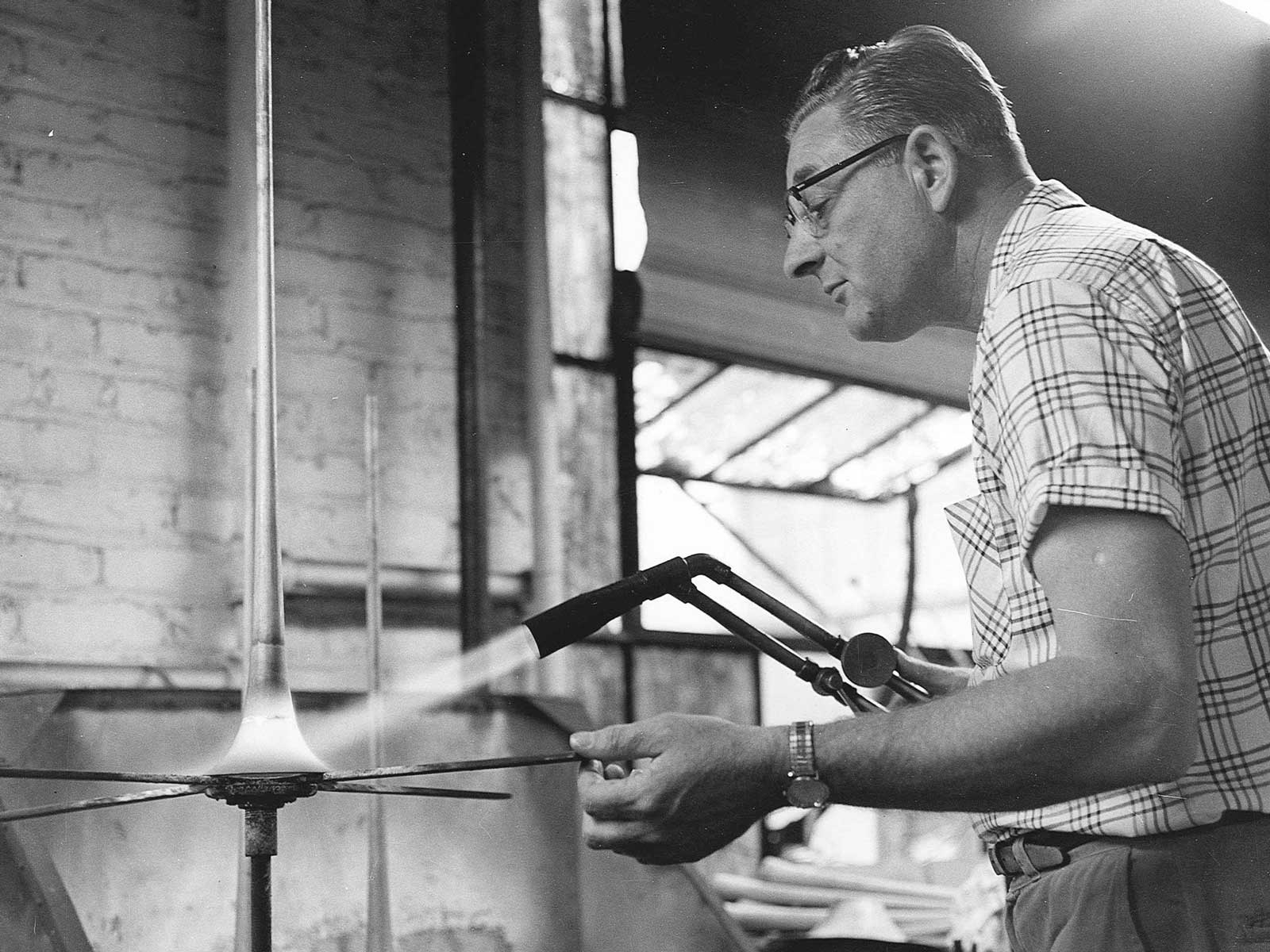
While few details are known about the proprietary “Bach” bell annealing process, a few details have been shared through the years. Click on the images below for a larger image.
Traditional bell annealing before the Elkhart facility involved using torches on the bell while pivoting it on a turntable. This process was performed for a prescribed amount of time and speed during the New York / Mt. Vernon manufacturing eras and was changed in the early 1970s to batch annealing in ovens in Elkhart.
” One important step in bell making is annealing—softening the brass after it has been rough formed. The traditional way of doing this is to play a torch on the bell until it reaches the correct temperature. The annealing was neither perfectly accurate nor perfectly uniform until we installed this oven, which heats thousands of bells at a time to the exact prescribed temperature for the exact amount of time.
source: Selmer Bandwagon #69, page 5
Bell Manufacturing Process - Freezing (1973)
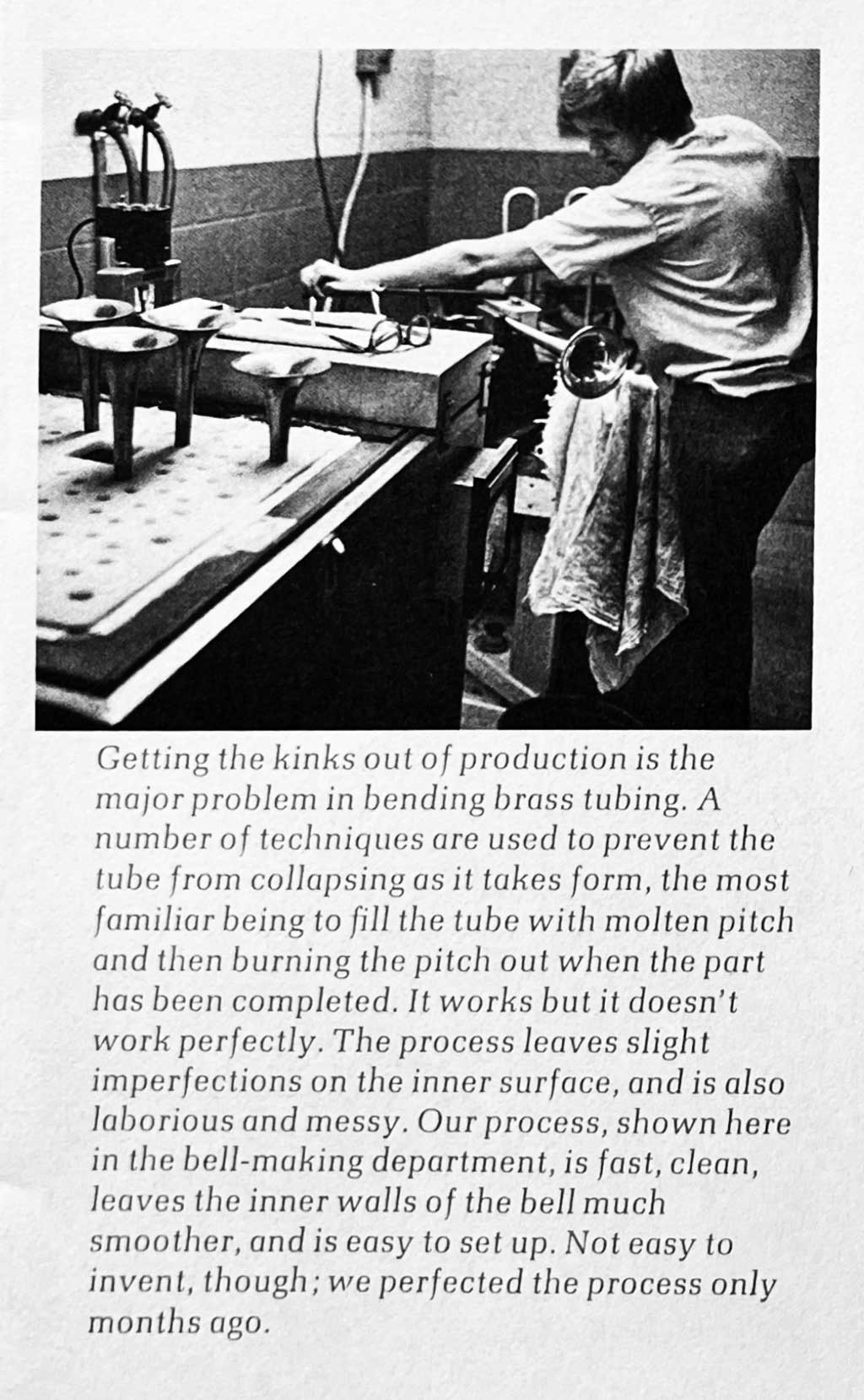
While few details are known about the proprietary “Bach” bell bending materials used, this Selmer article referenced their recent change in bending materials in 1973. At that time, Selmer changed the filler material in the Bell Crook to a frozen soap-type filler from the previously used, confidential alloy of pitch-type materials developed through the 1950s-1960s by Vincent Bach.
” Getting the kinks out of production is the major problem in bending brass tubing. A number of techniques are used to prevent the tube from collapsing as it takes its form, the most familiar being to fill the tube with molton pitch and then burn the pitch out when the part has been completed.
It works, but it doesn’t work perfectly. The process leaves slight imperfections on the inner surface and is also laborious and messy. Our process, shown here in the bell-making department, is fast and clean, leaves the inner walls of the bell much smoother, and is easy to set up. It is not easy to invest in, though; we perfected the process only months ago.
BachLoyalist - Everything about Vincent Bach Instruments
BachLoyalist.com is the ultimate reference to everything related to Vincent Bach & Bach Stradivarius brass instruments. This site has grown through the contributions of fellow Bach loyalists, and is one of the most complete references of Bach related instruments.