BachLoyalist.com is the ultimate reference to everything related to Vincent Bach & Bach Stradivarius brass instruments. This site has grown through the contributions of fellow Bach loyalists and is one of the most complete references of Bach-related instruments.
Vincent Bach continuously experimented with his brass instrument designs, and below are some comparisons of the variations in trumpet tuning slides. Contact us through the website, if you have other pertinent examples to share.
Tuning Slide Variations
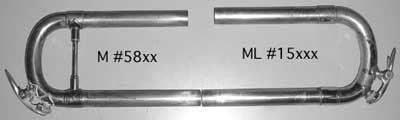
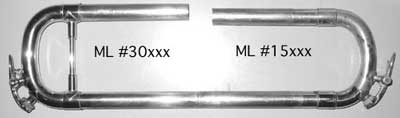
The master tuning slide crook in the early 1950s was made wider on later instruments made in the Mt. Vernon shop after approximately 1955. This difference is about 0.25 inch.
Tuning Slide entry 3rd valve SN#4117 courtesy of Jeff Dacks
Note how the tuning slide entry into the 3rd valve goes down at an angle. Newer Bach tuning slides go “straight” into the 3rd valve.
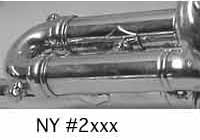
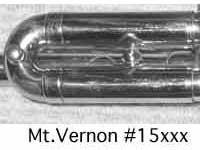
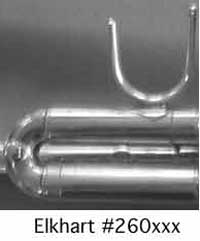
Also, it is very interesting to see the change in the wrap during time with early Vincent Bach trumpets. Also, note the relative position of the spit valve and drain concerning the main tuning slide. Here are some great examples:
Other examples of Bach Wraps on early Bach trumpets.
Bach Mercury (#58XX/)
vs.
Bach MtV (#15XXX/1956)
Bach MtV (#30XXX/1964)
vs.
Bach MtV (#15XXX/1956)
1st Valve Slide / Saddle Variations
” The first slide was changed to the reversed construction in the mid-1970s. It was done because the old style had to have an extension arm made to solder on the 1st slide tuning crook. By reversing the slide tubes, the slide action was greatly improved, and (2) by eliminating the soldering of the hook to the slide crook, it helped the response of notes associated with that valve.” from Tedd Waggoner (Vincent Bach Brass Product Manager)
The first valve saddle became standard in the 1970’s. Before that time, this was an option.
” It appears that between 1970-71, the change was made over to the current “reversed” tube on top that we are all familiar with. This change occurred between the serial numbers of 50,500 and 60,300. [3]
3rd Valve Slide / Stop Rod
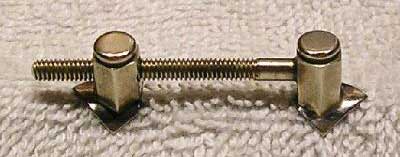
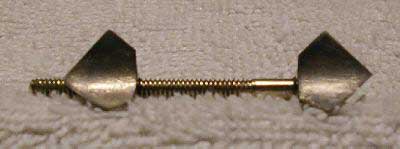
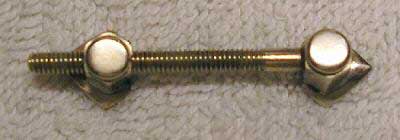
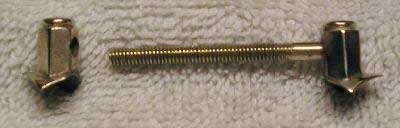
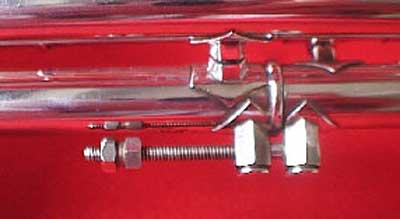
Before 1940, the stop rod bracing was hexagonal. Here are good examples of this style from a pre-1940 Bach. For example, in 1947, Bach trumpets transitioned to circular brackets vs. the hexagonal brackets shown above.
Mt. Vernon Bach’s had the stop rod guide facing the 3rd valve. Sometime in the mid-late 1960’s (the 1967 example shows this facing the bell), the stop rod was reversed to face the bell. We are looking for additional examples to narrow down this serial number range.
BachLoyalist - Everything about Vincent Bach Instruments
BachLoyalist.com is the ultimate reference to everything related to Vincent Bach & Bach Stradivarius brass instruments. This site has grown through the contributions of fellow Bach loyalists, and is one of the most complete references of Bach related instruments.