


Bracing variations in Bach Stradivarius trumpets
“Early differences are the nickel hex braces through Vincent Bach trumpets and trombones. This changed around 1940 to what we are familiar (cylindrical) with today.”
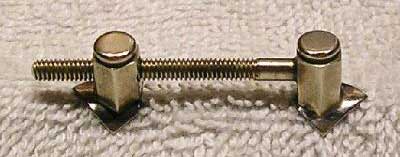
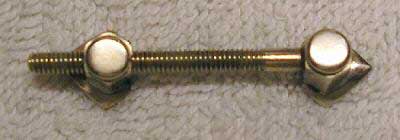
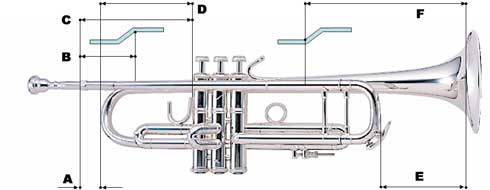
Thanks to Marco Rippert who provided the concept and initial measurements of key bracing locations. Note the potential variation required to get the fullest sound from your Bach trumpet.
| measurement (mm) | ||||||||
| Serial | Year | Model | A | B | C | D | E | F |
| 114688 | 1975 | 180-38 M 25 | 12 | 56 | 137 | 128 | 112 | 192 |
| 250XXX | 1985 | 180LT72 ML 43 | 9 | 80 | 136 | 127 | 114 | 210 |
| 510XXX | 2000 | 180LT72 ML 43 | 12 | 75 | 137 | 125 | 101 | 192 |
The bracing materials of Bach trumpets and trombones have changed over the years. Here is a simple summary, but we are always looking for more detailed information.
- Bach 190 50th Anniversary Trumpet = “Cast” Nickel Silver Z Bracing
- xxx
” The new 2nd Gen 50th Anniversary Bach sees one significant change in design from the original 50th Anniversary model: Cast Nickel-Silver Z Bracing. These are the two braces between the leadpipe and bell. The new cast nickel-silver gives a more consistent part to assemble with than the previous braces (made from bent brass). The casting process makes the brace the same shape each time, rather than a straight piece bent into shape. Theoretically, this should give a better assembly consistency as the brace soldering on Bach’s is one of the most important things to a horn’s responsiveness. If assembled well, a horn vibrates freely. If assembled poorly (under stress), the horn will play dull. The cast part should help immensely in this… but we will still inspect every Bach in our store to ensure it is done correctly!
Using Nickel-Silver in the casted brace will also increase the mass of these braces, further assisting in vibration transfer throughout the whole horn. These braces act as a “vibration bridge,” much like a sound post in a violin. So while the assembly quality is the most important with these braces, the mass will allow for more vibration transfer from each piece, improving response.” [1]
source: Marco Rippert
source: Kessler & Sons
